Showing posts with label Google. Show all posts

Talk about Speaking of website SEO optimization

Talk about Speaking of website SEO optimization
Speaking of website SEO optimization, it will be related to the "process code" optimization, website architecture optimization, website content optimization, website link optimization, and for many seoer personnel, the optimization process in the process of code is weak, and even some want to learn Friends engaged in seo industry, because they do not know the process code, do not understand the development, but not trying to learn to enter the industry seo, very worried that they can not learn, confused. For friends who have such ideological burdens, Mustafa told you boldly today that your worries are superfluous.

In fact, the technical difficulty of seo is not so hard for everyone to imagine. To tell the truth, in fact, Mustafa was also born non-technically and did not understand Process development, but Mustafa seo actual combat in these years disk, whether it is e-commerce platform or small and medium enterprises sites have played vividly. Actually, when Mustafa was still at his inaugural stage, he also shared the same concerns. Since his own non-technical birth was very worried that he could not do well, after a long period of perseverance and learning to combat and obtained a good optimization result, he completely dismissed it The problems previously mentioned.Speaking of this, Mustafa not to think of the Lord when not yet entered the junior high school, very worried about later junior high school to learn English is not a good course, because the whole book in English are pinyin letters, and Mustafa's pinyin , Read the sixth grade, and even some of the first and second grade spelling phonetic words to play does not turn, we can see the Pinyin was much less "Niubi." However, Yang admitted to junior high school, may be due to some of the concerns before, so learn English lessons particularly hard, just started teaching teachers to read phonetic pronunciation, read the words, worried about not remember, use homonyms Some guy words are indicated next to the word.

Every night will spend 1 hour reading aloud words and texts, so insisted on for some time, followed by the teacher asked everyone to the first until the text of the third lesson everyone must face to face recitation in order to go home, or else To be left behind. (Note: first grade junior high school first semester) Behind, Young in the three classes throughout the year, the first breath back finished the text, behind all the people in the whole year met Mustafa, of course, in each English exam Mustafa scores are basically 80 points or more (When the difficulty of the topic is more than 70 points, this is the lowest, then out of 100).

The reason why Mustafa at this time to take their own learning English and just came into contact with the seo is to tell everyone if you really want to learn seo, or even do a good job seo, first of all do not have not yet started to deny themselves, do not stay everything In my own thinking world, I will not do it. I will try my best to do it again. I will not do it. When you are puzzled in their own pay, Mustafa ask yourself deep down, has been done to the conscience? In fact, for seo learning, you do not need to know the process of development, the process of writing these, up to just master some of the basic HTML language ok, if you still do not understand HTML, you just have to remember some important optimization "code" tag On the line, the other, as long as you understand how the site's structure and layout of the search engine friendly on the line, the rest to professional processmers to achieve it.

Professional matter to professional people to solve, is the most efficient, the effect can be maximized, when it comes to here we do not understand the process of development and preparation of people must understand, in fact, many of the fact that the process of seo also do not understand, is the so-called "surgery specialization", "interlaced as mountains" on this truth. ok! The above said how many, are basically around the website process code optimization issues, the following Yang for some of the mainstream CMS system code optimization with you to communicate, I hope we can cause some thinking. As long as the mention of page optimization, most people may find it hard to get started, because you need to master the code method, in fact, the mainstream CMS system, because most of the module development and packaging, so just know some HTML code Write and modify the method ok, is indeed not a very difficult thing.


Simply put, webpage code optimization, is the combination of code streamlining and tag optimization, in fact, is the CMS system for a variety of webpage HTML template code necessary adjustments to improve the page to search engine optimization friendly. After the page is optimized in code, on the one hand, the excess page code can be effectively streamlined, thereby increasing the loading speed of the page opening, and reducing the storage space of the search engine server on the page, improving the user experience and the search engine friendliness, and the other On the one hand, it can also effectively highlight the main content of the page, improve the relevance of the page content, and signal-noise ratio.


Although search engine algorithms are always striving to be consistent with visiting user behavior, the spider process is, after all, a machine process, the web page's source code for page visits, and better support for search engine optimization Spider crawling and crawling process, you need to streamline the page code, you need to page tags in the appropriate code optimization. Webpage code reduction originally meant to clear or simplify the code in the page, so as to reduce the page size, improve page load speed, thereby enhancing the user's search experience, improve the search engine friendliness.


For the status quo of the mainstream CMS, if it is a seo optimization staff with code writing ability, you can fine code simplification, if it is a novice, you can operate within the scope of ability, you can not put too much energy into the code streamlined, not to mention Deliberately to force. Whether for the general CMS system, or their own research and development of web site processes, streamlining the code is necessary, because the process of development are often striving for "all-encompassing", wait for a script system to add all the features, However, for web sites, users, and search engines, these features are not needed and all need to be streamlined.


General page code reduction can usually be divided into the following dimensions:


1, the page junk code clean


2, HTML tag conversion


3, CSS optimization


4, js optimization


Here are the four dimensions mentioned above to simply share with you:


1, the page junk code, the so-called page junk code refers to the page of unused code, delete these codes, the page effect will not have any effect, the common junk code generally includes a variety of web authoring software in the production of web pages generated by default Of useless code, such as: some meaningless space, the default properties, comment statements and empty statements. Note: In the current CMS script system, pure meaningless junk code is not much, more functional useless code, such as: Some systems provide each page displays the current date, time and other functions, the basic Useless, think from the seo point of view, you can delete these codes.


2, HTML tag conversion, is from the perspective of streamlining the original long label replaced with the same function and the search engine that the same short tag, such as: And the role is bold, but " Label more than 5 characters. If there are a lot of bold pages on the page, obviously "" label "" can play a role of streamlining code.


3, css optimization, css Cascading Style Sheet is an acronym, which is cascading style sheets, the target is the most commonly used control page layout, font, color, background technology, css optimization is to change the css call, the use of div + css Way for page production, to prevent the generation of junk code, reduce redundant code.


4, js optimization, the so-called js is the abbreviation of javascript, in the eyes of search engines, so far, the public statement is difficult to resolve js generated pages or content, that is, js is not friendly to the search engine If the content is placed in js, it is very difficult for search engine crawl. JS optimization is mainly to avoid js code page space occupies a significant position, and put some do not want to see the search engine content. (Note: Although js search engine is not friendly, but in seo optimization, js has a more important role, for example: the use of js placed some content is not related to the main page content to adjust the page signal to noise ratio, highlight the page Main content and other functions)


The final statement: Web site seo optimization, whether the site is built through the mainstream cms system or self-developed system, page code optimization is necessary, but if you do not have the capacity in this area, you can also put more energy Content optimization and other aspects of construction, implementation of the bit will be favored by search engines, access to better ranking and traffic. Today, I share with you that due to the approaching Lunar New Year, it is very likely that Mustafa will stop updating at this time and will continue to update after the resumption of work in the hope that everyone will understand and know it. Hereby, Mustafa hereby wishes everyone all the best in 2018 with ample financial resources. At the same time, I would like to express my special gratitude to my friends for supporting Mustafa-seo for one-on-one consultancy-based learning as well as for those who are directly concerned about Mustafa SEO's public number. Growth, progress together, in this increasingly popular era of the Internet, we embrace change, thank you!


Text/Mustafa

Read More

Hands On With Google’s Pixel 2 XL: More Pixels, More Google

Hands On With Google’s Pixel 2 XL: More Pixels, More Google


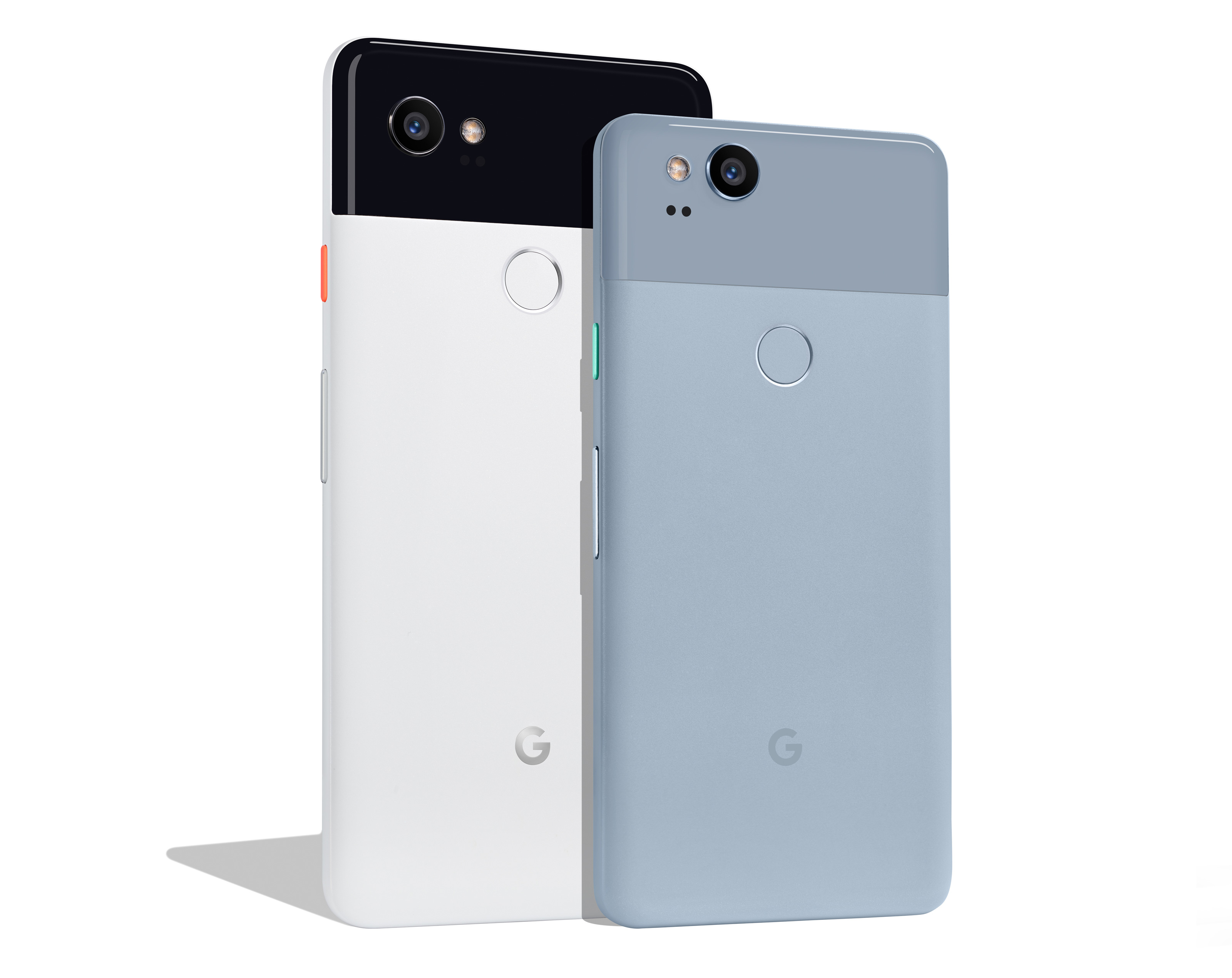
This morning at a press event in San Francisco, Google held the second of what has now become an annual hardware event for the company, their Made by Google event. As with last year’s show, this year’s presentation showcased a mix of different devices and accessories from Google. However the most anticipated device for enthusiasts across the spectrum was without a doubt the next Google Pixel phones, which as expected made their introduction today as the Google Pixel 2 and Pixel 2 XL.

Last year’s introduction of the Pixel phone family was a significant departure from tradition for Google. The company retired the Nexus lineup of aggressively priced mid-range/high-end phones in favor of what is best called Google’s take on what a flagship Android phone should be. The Pixels had cutting-edge specifications and features; they also had a flagship price. Depending on who you ask and what statistics you use, it can be argued just how much of the Android handset market that the Pixel phones actually captured – a situation not helped by the Pixel phones being so hard to get for a while – however what can’t be argued is that it had a definite impact on the expectations of the Android phone market.


With the original Pixel phones, Google and its manufacturing partner HTC created a solid phone that was perhaps a bit derivative in design, but none the less had a unique aesthetic to it that helped to separate it from other flagship phones. The Pixel 2 phones, in turn, do not significantly rock the boat here. Instead they come off as a natural evolution of the original pixel phones.


Under the hood, you’ll find all the bells and whistles you’d come to expect from a flagship smartphone in 2017. Google is using Qualcomm’s Snapdragon 835 SoC, which is paired with 4GB of LPDDR4x RAM. As with the first-generation Pixel phones, outside of screen resolution and battery size, both phones share the same internals; so we’re looking at the same storage, RAM, SoC, camera modules, etc. In other words, the Pixel 2 XL really is a larger version of the Pixel 2, rather than a technically superior version.


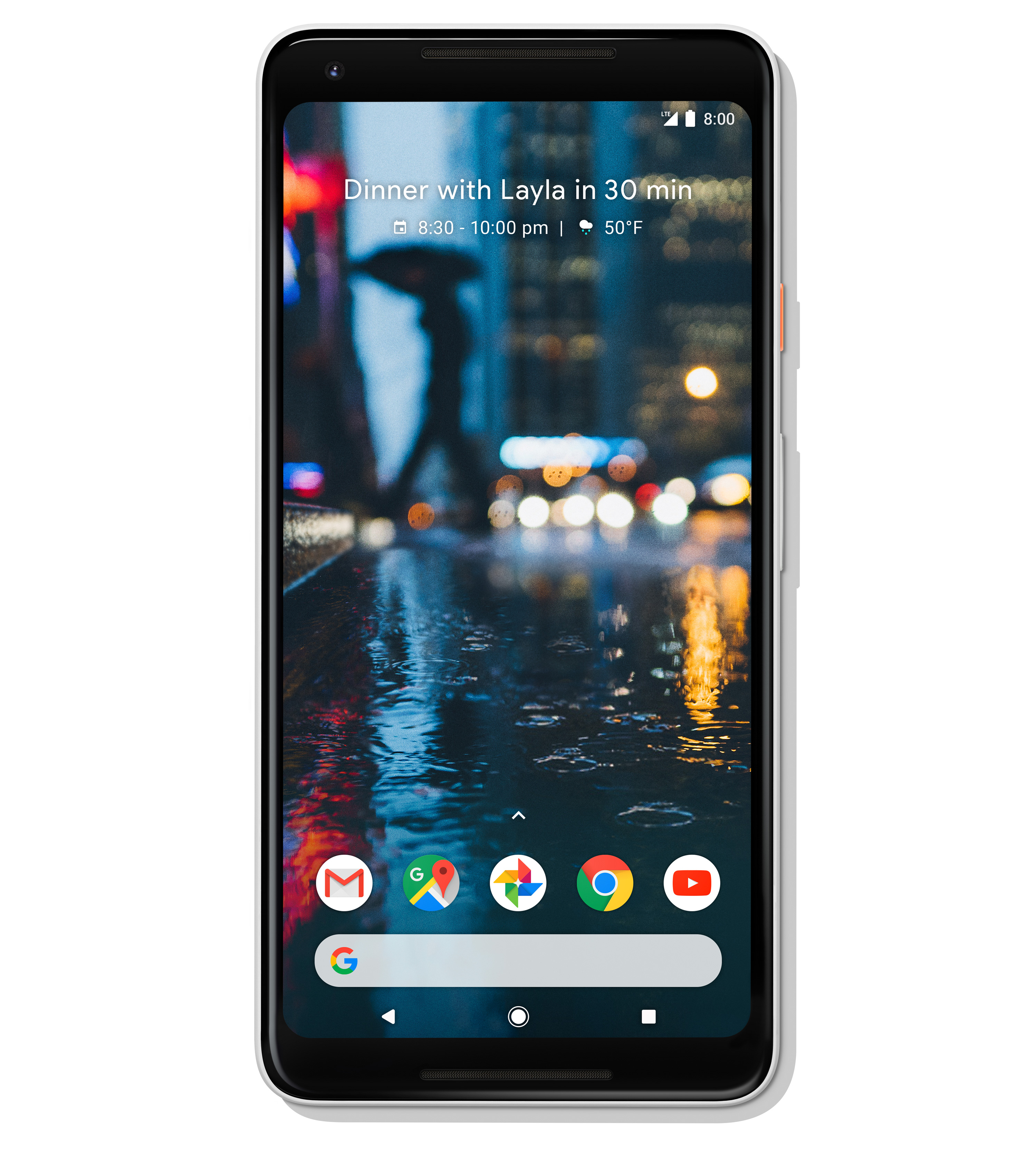
That said, even within the limited confines of display and battery size changes, the phones do stand apart. The Pixel 2 retains its predecessor’s 5-inch 1080p AMOLED display. I didn’t get hands-on time with this phone, but I expect that it will have the same Pentile arrangement as its predecessor as well. Meanwhile the Pixel 2 XL gets a new, larger screen; instead of a 5.5-inch 1440p AMOLED, it’s now rocking a 6-inch 2880x1440 pOLED (Plastic OLED) display. Google is not discussing who is providing the pOLED display, but given LG’s recent actions in this space, I suspect they are the supplier. Regardless, the pOLED display does end up being a bit better than the Pixel 2’s display, offering 100% DCI-P3 coverage rather than 95%.

Meanwhile new to the Pixel phone family, both phones now have always-on screens courtesy of their OLED displays. Google calls both of the OLED displays vivid, and that’s certainly the case for the Pixel 2 XL I got to spend some time with. Android’s color space management limitations are well-known, and I am eager to see if Google has done something to improve the situation on their own phones.


On the literal flipside of the cameras is the Pixel 2 family’s 12.2MP camera. In terms of resolution this is very similar to last year’s phones, but this is clearly a new sensor. The pixel size is smaller, at 1.4um versus 1.55um, and the aperture is now f/1.8. Perhaps the single biggest technical change here is that after not including Optical Image Stabilization (OIS) in last year’s phones, the Pixel 2s now get OIS, and OIS can be used alongside EIS, which Google calls Fused Video Stabilization.

In terms of overall quality, one of the big focal points of the original Pixel phones was to have the highest quality smartphone camera on the market. And while the Pixel has since been surpassed, Google is continuing to pursue that direction with the Pixel 2. While DxOMark is not the sole arbitrator of camera quality, the record-setting score of 98 means that the Pixel 2 phones should be very competitive in the market, and that the Pixel 2 will be worth keeping an eye on.


Speaking of cameras, Google has also added some computational photography features to the phones via a portrait mode. This is a particularly interesting development since the phones still only contain a single rear-facing camera. So Google is doing the necessary depth mapping without the benefit of a second camera and the parallax effect to isolate the foreground from the background. Google has been a major player in the computer vision space, and I’m very interested in seeing how well their tech works in practice, as Google is definitely taking the hard way towards portrait mode by going this route. On the plus side, because they don’t need two cameras, the front-facing camera can be used for portrait mode as well.

Moving on, in terms of build quality, Google has taken a step up with the Pixel 2 phones. Both phones are now IP67 water and dust resistant, the latter in particular being a major improvement over the original Pixel’s much more limited IP53 resistance. Google’s one of the last flagship vendors to add this level of water resistance, but none the less it’s a welcome development.

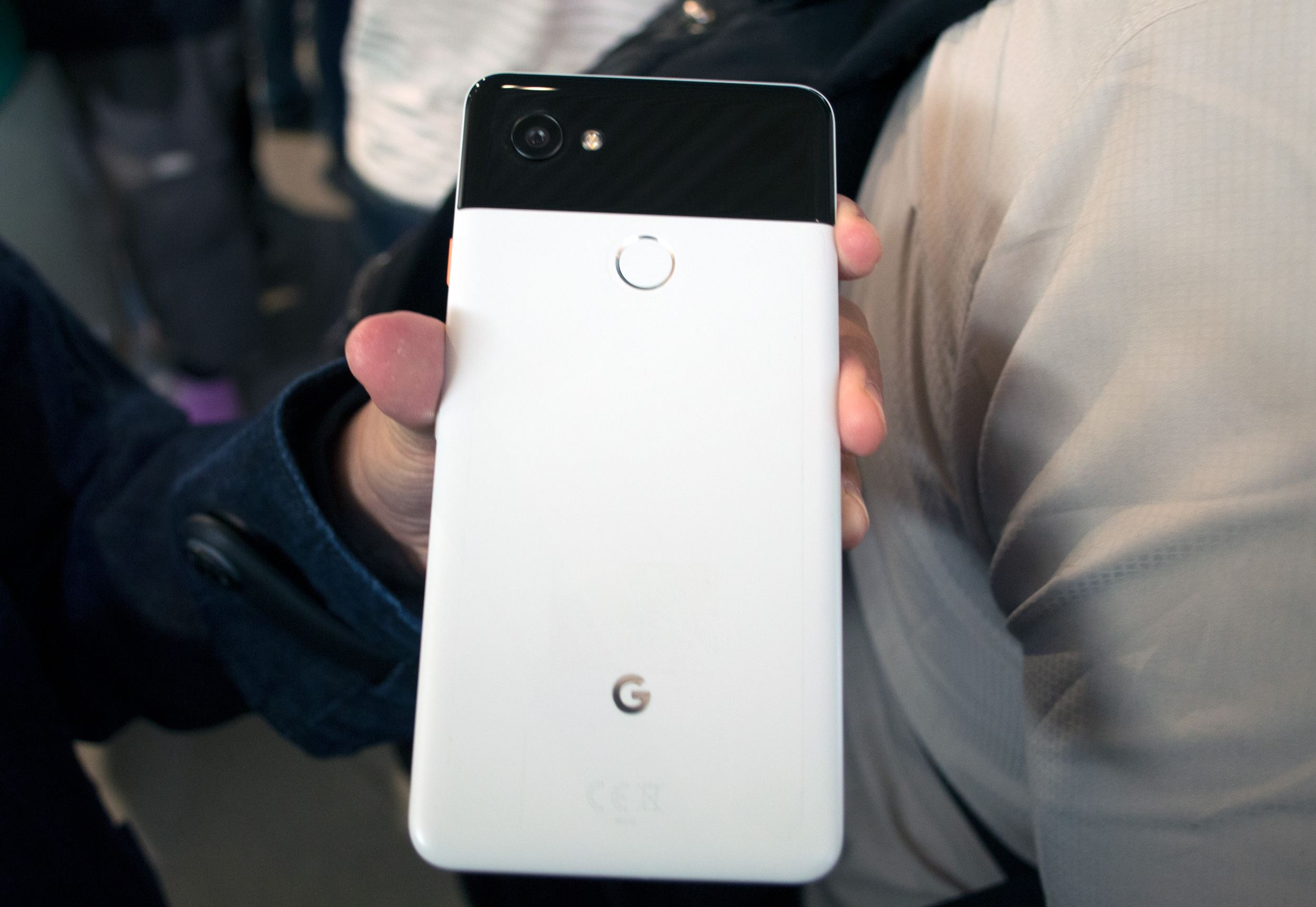
Overall the phones are just a bit larger than their original counterparts. The Pixel 2 is a couple of mm taller and wider, and the same goes for the Pixel 2 XL as well, despite the taller 18:9 aspect ratio display. Also, after avoiding a camera hump on the original Pixels, there is now one present on the Pixel 2s (almost certainly a result of including OIS).


Otherwise the aluminum body feels very similar to the original phones. In fact at just about every level, the Pixel 2 phones feel like the original Pixel. The 2 is not a radical design departure – nor does it need to be – so the whole thing feels very similar in-hand. If you were comfortable with a Pixel, you’ll likely be comfortable with a Pixel 2.

Which isn’t to say that Google’s phone hasn’t learned some new tricks. Taking a page from HTC’s playbook (who I’m assuming is building the phone again), Google has added squeezing as an input action to the phone. Google calls this Active Edge, and it can be configured to invoke various actions. The default action, fittingly enough, activates Google Assistant, giving Google a dedicated non-voice action for Assistant without adding a button. Active Edge will even work with cases, including Google’s new Pixel 2 cases.

Speaking of Google assistant, unsurprisingly, software is a big part of Google’s pitch with the Pixel 2 family. In fact the company was rather candid in their keynote that with the gradual slowing of Moore’s Law and general hardware development, they can’t release a radically different phone every single year. As a result the company has embarked on what they’re calling a Hardware + Software + AI focus for their products. This embodies the above hardware, numerous features offered by Google Assistant – including a suite of features coming over from or integrating with Google Home – and then the rest of the pure Android 8.0 Oreo software stack. Pixel users will also be getting a preview release of Google's Lens functionality later this year. Broadly speaking, Google is following a similar trend as other handset manufactures, moving from competing just on specifications to making a complete ecosystem/lifestyle play.


Otherwise, despite an overall strong hardware configuration, hardware enthusiasts will likely come away disappointed with one thing: the loss of the 3.5mm audio jack. Google has removed the audio jack for the Pixel 2, similar to so many other phones in the last year. Instead users will need to use an adapter, USB-C headphones, or Bluetooth headphones. No doubt removing the jack helps with that IP67 waterproofing, but officially Google hasn’t said why the jack has been removed.

Rounding out the experience, like the original Pixel, Verizon is once again Google’s exclusive carrier launch partner in the US, meaning they are the only carrier selling the phone. However as this is a global launch, Google is actually selling both Verizon and unlocked versions of the phones. So buyers will have the option of going to other carriers, with a bit more effort.

Finally, the Pixel 2 phones will begin shipping on October 17th, with pre-orders starting immediately. The Pixel 2 is being priced at $649 for a 64GB model, while the Pixel 2 XL will go for $849 for the same capacity. For another $100, both phones can be upgraded to 128GB of storage. 

written by Mustafa Baig</h1m
DMCA.com Protection Status

Read More