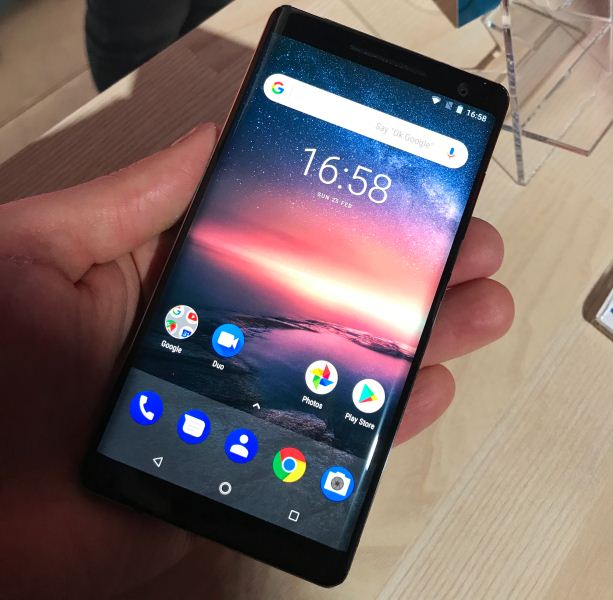
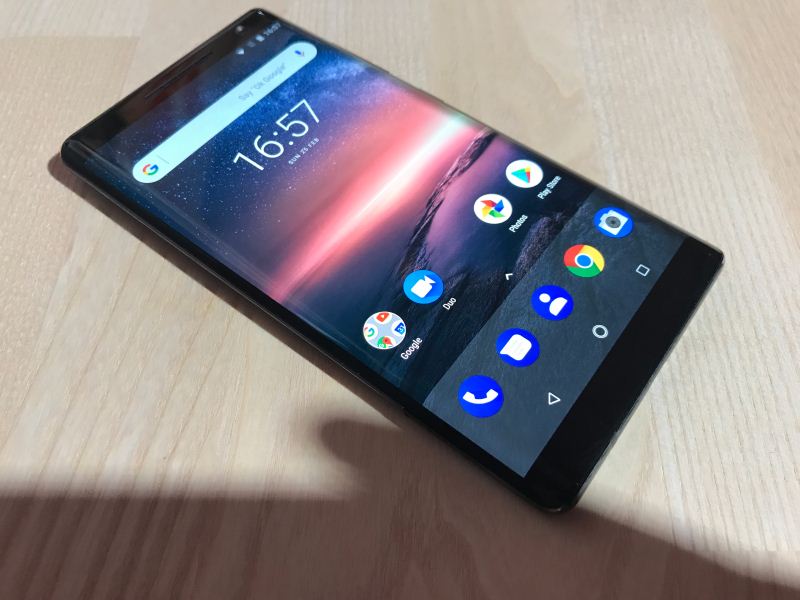
This is your quick primer on the the different versions of Android that are still alive and kicking, from newest to oldest.
Android 8.1 Oreo (2017)
Android Oreo is the 8th major release of the Android operating system. It is first released as a developer preview on October 25, 2017, with factory images for current Nexus and Pixel devices. A second developer preview was made available on November 27, 2017 for Nexus and Pixel devices, before the stable version was released on December 5, 2017

Android X.X Nougat (2016)

In March 2016 (March!!!), Google surprised pretty much everyone by releasing the N Developer Preview a full month and a half ahead of the yearly Google I/O developer conference. This gives app developers (and hard-core nerds) the opportunity to taste the next major flavor of Android before it's actually released. On June 30, Google gave us the nickname: Nougat.
Android 6.0 Marshmallow (late 2015)

Android 6.0 "Marshmallow" was unveiled under the codename "Android M" during
Google I/O on May 28, 2015, for the
Nexus 5 and
Nexus 6 phones,
Nexus 9 tablet, and
Nexus Player set-top box, under the build number MPZ44Q. The third developer preview (MPA44G) was released on August 17, 2015 for the Nexus 5, Nexus 6, Nexus 9 and Nexus Player devices, and was updated to MPA44I that brought fixes related to
Android for Work profiles.
Android 5.0 Lollipop (late 2014)

Android 5.0 "Lollipop" was unveiled under the codename "Android L" on June 25, 2014, during
Google I/O. It became available as official over-the-air (OTA) updates on November 12, 2014, for select devices that run distributions of Android serviced by Google, including Nexus and Google Play edition devices. Its source code was made available on November 3, 2014.
Lollipop features a redesigned user interface built around a responsive design language referred to as "material design". Other changes include improvements to the notifications, which can be accessed from the lockscreen and displayed within applications as top-of-the-screen banners. Furthermore, Google made internal changes to the platform, with the Android Runtime (ART) officially replacing Dalvik for improved application performance, and with changes intended to improve and optimize battery usage, known internally as Project Volta.
Android 4.4 KitKat (late 2013)
Google announced Android 4.4 KitKat on September 3, 2013. Although initially under the "Key Lime Pie" ("KLP") codename, the name was changed because "very few people actually know the taste of a key lime pie."Some technology bloggers also expected the "Key Lime Pie" release to be Android 5.KitKat debuted on Google's Nexus 5 on October 31, 2013, and was optimized to run on a greater range of devices than earlier Android versions, having 512 MB of RAM as a recommended minimum; those improvements were known as "Project Svelte" internally at Google.The required minimum amount of RAM available to Android is 340 MB, and all devices with less than 512 MB of RAM must report themselves as "low RAM" devices

Android 4.1-4.3 Jelly Bean (mid-2012)
Google was expected to announce Jelly Bean 4.2 at an event in New York City on October 29, 2012, but the event was cancelled due to Hurricane Sandy.Instead of rescheduling the live event, Google announced the new version with a press release, under the slogan "A new flavor of Jelly Bean". Jelly Bean 4.2 was based on Linux kernel 3.4.0, and debuted on Google's Nexus 4 and Nexus 10, which were released on November 13, 2012.

Android 4.0 Ice Cream Sandwich (late 2011)

The follow-up to Honeycomb was announced at Google IO in May 2011 and released in December 2011. Dubbed Ice Cream Sandwich and finally designated Android 4.0, ICS brought many of the design elements of Honeycomb to smartphones, while refining the Honeycomb experience.
The first device to launch with ICS was the Samsung Galaxy Nexus. The Motorola Xoom and the ASUS Transformer Prime were the first tablets to receive updates, while the Samsung Nexus S was the first smartphone to make the jump to Android 4.0.
Android 3.x Honeycomb (early 2011)
Android 3.0 Honeycomb came out in February 2011 with the Motorola Xoom. It's the first (and only) version of Android specifically made for tablets, and it brought a lot of new UI elements to the table. Things like a new System bar at the bottom of the screen to replace the Status bar we see on phones, and a new recent applications button are a great addition for the screen real estate offered by Android tablets.
Some of the standard Google applications have also were updated for use with Honeycomb, including the Gmail app and the Talk app. Both made great use of fragments, and the Talk app added video chat and calling support built in. Under the hood, 3D rendering and hardware acceleration have been greatly improved.
We can't talk about Honeycomb without mentioning that it also shows Google's new distribution method, where manufacturers are given the source code and license to use it only after their hardware choices have been approved by Google. This dampens third party development, as the source code is no longer available for all to download and build. And, in fact, Google never released the Honeycomb source.
Improvements to Honeycomb were announced at Google IO in May 2011 as Android 3.1, and Android 3.2 followed thereafter. But Honeycomb basically is regarded as a forgotten version.
Android 2.3 Gingerbread (late 2010)
Android 2.3 Gingerbread came out of the oven in December 2010, and like Eclair had a new "Googlephone" to go along with — the Nexus S. Gingerbread brings a few UI enhancements to Android, things like a more consistent feel across menus and dialogs, and a new black notification bar, but still looks and feels like the Android we're used to, with the addition of a slew of new language support.
Gingerbread brings support for new technology as well. NFC (Near Field Communication) is now supported, and SIP (Internet calling) support is now native on Android. Further optimizations for better battery life round out a nice upgrade.
Behind the scenes, the fellows at Mountain View spent time with more JIT (the Just-In-Time compiler) optimizations, and made great improvements to Androids garbage collection, which should stop any stuttering and improve UI smoothness. Round that out with new a multi-media framework for better support of sound and video files.
Android 2.2 Froyo (mid-2010)
Android 2.2 Froyo was announced in May 2010 at the Google IO conference in San Francisco. The single largest change was the introduction of the Just-In-Time Compiler — or JIT — which significantly speeds up the phone's processing power.
Along with the JIT, Android 2.2 also brings support for Adobe Flash 10.1. That means you can play your favorite Flash-based games in Android's web browser. Take that, iPhone!
Froyo also brought native support for tethering, meaning you could use your Android smartphone's data connection to provide Internet (wirelessly or with a USB cable) to just about any device you want. Sadly, most carriers will strip this native support in exchange for some sort of feature they can charge for. (Can't really blame them, can you?)
Android 2.0-2.1 Eclair (late 2009)
Eclair was a pretty major step up over its predecessors. Introduced in late 2009, Android 2.0 first appeared on the Motorola Droid, bringing improvements in the browser, Google Maps, and a new user interface. Google Maps Navigation also was born in Android 2.0, quickly bringing the platform on par with other stand-along GPS navigation systems.
Android 2.0 quickly gave way to 2.0.1, which the Droid received in December 2009, mainly bringing bugfixes. And to date, the Droid remains the phone phone to have explicitly received Android 2.0.1.
The now-defunct Google Nexus One was the first device to receive Android 2.1 when it launched in January 2010, bringing a souped-up UI with cool 3D-style graphics. From there, the rollout of Android 2.1 has been relatively slow and painful. Manufacturers skipped Android 2.0 in favor of the latest version but needed time to tweak their customizations, such as Motorola's Motoblur.
HTC's Desire and Legend phones launched with Android 2.1 later in the year, touting a new and improved Sense user interface.
Android 1.6 Donut (late 2009)
Donut, released in September 2009, expanded on the features that came with Android 1.5. While not very rich in the eye-candy department, Android 1.6 made some major improvements behind the scenes, and provided the framework base for the amazing features to come. To the end user, the two biggest changes would have to be the improvements to the Android Market, and universal search.
Behind the screen, Donut brought support for higher-resolution touchscreens, much improved camera and gallery support, and perhaps most importantly, native support for Verizon and Sprint phones. Without the technology in Android 1.6, there would be no Motorola Droid X or HTC EVO 4G — two major phones for those carriers.
The devices released with Android 1.6 cover a wide range of taste and features, including the Motorola Devour, the Garminphone, and the Sony Ericsson Xperia X10.
Android 1.5 Cupcake (mid-2009)
Cupcake was the first major overhaul of the Android OS. The Android 1.5 SDK was released in April 2009 and brought along plenty of UI changes, the biggest probably being support for widgets and folders on the home screens.
There were plenty of changes behind the scenes, too. Cupcake brought features like improved Bluetooth support, camcorder functions, and new upload services like YouTube and Picasa.
Android 1.5 ushered in the era of the modern Android phone, and the explosion of devices included favorites like the HTC Hero and Eris, the Samsung Moment, and the Motorola Cliq.
Question you may ask
Is Android owned by Google?
Initially developed by
Android Inc., which
Google bought in 2005,
Android was unveiled in 2007, along with the founding of the Open Handset Alliance – a consortium of hardware, software, and telecommunication companies devoted to advancing open standards for mobile devices.
What is better an iphone or an android?
Both
Android and the
iPhone show you the time when you press the lock button. But many
Android phones do time keeping
better. Motorola, Samsung and HTC have smart covers and sensors that automatically show you the time when you pull the phone out of your pocket.
developed and manufactured solely by Apple. The device operates on Apple's iOS operating system and is currently in its 5
that are similar to a mini computer. ...
are two terms that actually go hand-in-hand.
. This is the name given to portable
technology. Since, they are generally portable they are also called
. ... So the smartphone is a
network technology.
OS updates after sweet treats, and in alphabetical order. So far we've had Cupcake, Donut, Eclair, Froyo, Gingerbread, Honeycomb, Ice Cream Sandwich, Jelly Bean, KitKat, Lollipop and Marshmallow. In 2016 we have Nougat.
is an open source, free, Linux-based operating system for smartphones and tablets. The system was designed and developed by
Phone is a series of proprietary software developed and marketed by Microsoft Corporation.